Introduction: The Dehydration Epidemic
The standard advice of “drink 8 glasses a day” is not just outdated; it is physiologically inaccurate. Your hydration needs are dynamic, shifting with temperature, activity level, and biological cycles. Sticking to a static number ignores the complex hydro-dynamics of the human body.
Most people operate in a state of sub-clinical dehydration, leading to brain fog, fatigue, and decreased metabolic efficiency. Aura Water was built to solve this by bringing precision science to your daily routine. This guide is a deep dive into the science of hydration and how you can optimize your biology using the latest in local AI technology.
Part 1: The Science of Human Hydration
To understand why a “smart” tracker is necessary, we must first understand the complex role water plays in our biology.
1.1 Beyond Just H2O
Water is the medium for every chemical reaction in your body. It regulates temperature, lubricates joints, and—most importantly—acts as the primary transport system for nutrients and waste products. When you are even 1-2% dehydrated, your cognitive performance can drop by as much as 20%.
1.2 The Myth of 8 Glasses
The “8x8 rule” (eight 8-ounce glasses a day) has no scientific basis. It originated from a misinterpretation of a 1945 recommendation that didn’t account for the water we get from food. In reality, a high-performance athlete in a humid environment might need 6 liters, while a sedentary office worker in a cool room might need only 2.
1.3 Intracellular vs. Extracellular Hydration
True hydration isn’t just about how much water is in your stomach; it’s about how much is inside your cells. This balance is managed by the “Sodium-Potassium Pump,” which requires specific concentrations of electrolytes to function. Chugging plain water can actually dehydrate your cells by flushing out these essential minerals.
Part 2: The Technical Why: AI-Powered Hydration Intelligence
Real hydration isn’t about volume; it’s about absorption and balance. Unlike basic trackers that just count cups, Aura Water uses advanced local AI models to predict your needs.
2.1 Real-Time Environmental Integration
Aura doesn’t just look at your manual logs. It processes real-time environmental data:
- Ambient Temperature: Higher heat increases sweat rate even at rest.
- Humidity Levels: High humidity slows evaporation, affecting how your body cools itself. When sweat can’t evaporate, your body continues to pump out more fluid, leading to rapid dehydration.
- Altitude: At higher altitudes, the air is drier and you breathe faster, leading to significant “insensible water loss” through respiration.
2.2 Biometric Syncing
By integrating with your device’s activity sensors, Aura calculates fluid loss based on:
- Step Count & Intensity: Not all movement is equal. A sprint loses more fluid than a stroll. Aura categorizes movement types to estimate sweat production accurately.
- Heart Rate Variability (HRV): Aura uses HRV as a proxy for physiological stress. During high-stress periods, your body may require more fluid to manage cortisol levels and support recovery.
2.3 Local Processing (Privacy First)
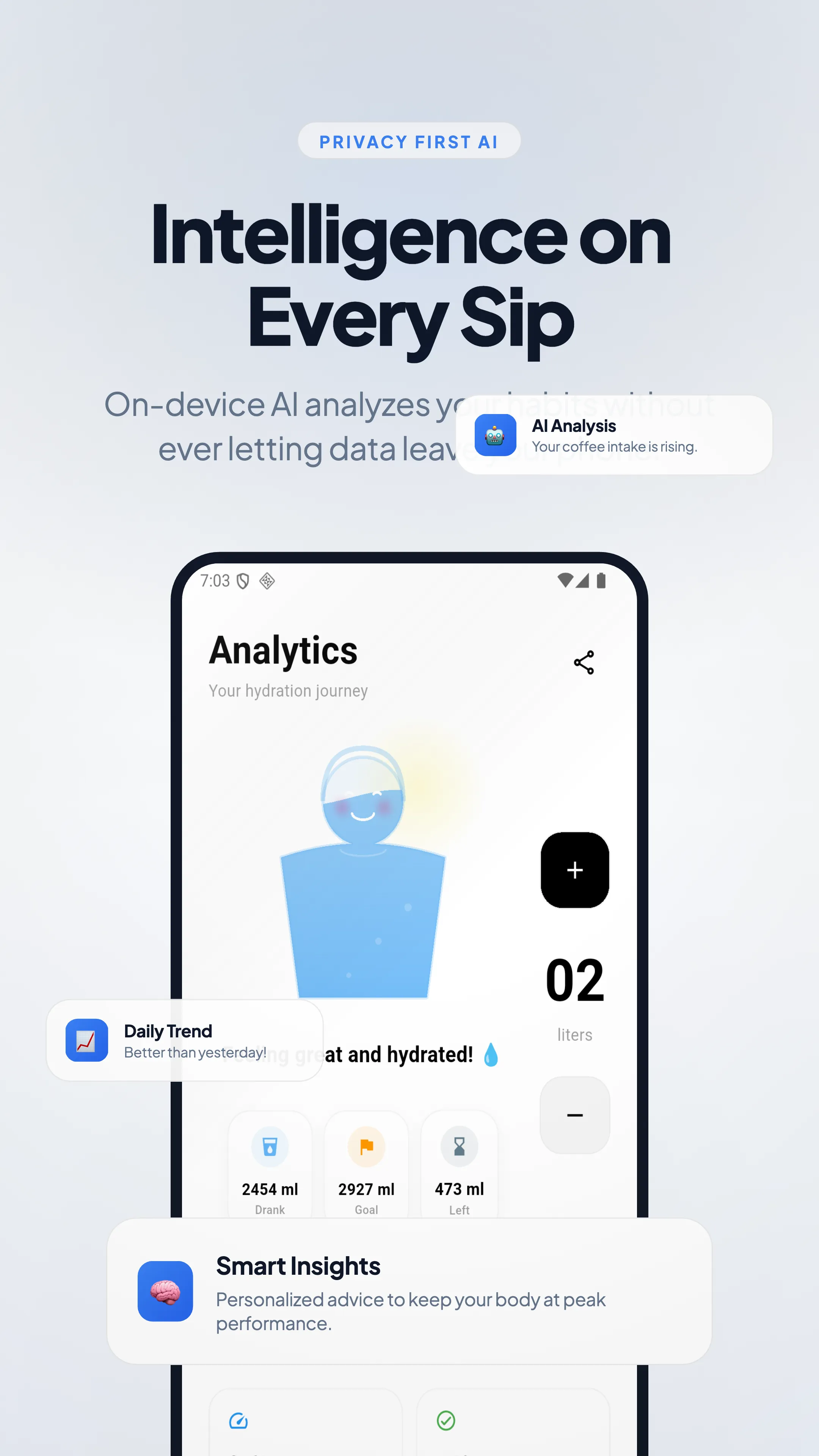
This is not a cloud API call. The computation happens directly on your device’s NPU (Neural Processing Unit). Your physiological data, location, and activity patterns are never sent to a server. This is critical for health data sovereignty.
const recommendation = personalizeGoal(netRequirement, cognitiveLoadScore); // Result: “Hydration status: -350ml. Drink 250ml now to maintain peak focus.”
Part 3: The Electrolyte Equation
One of the biggest mistakes in hydration is drinking too much plain water without replenishing salts. This can lead to hyponatremia—a dangerous dilution of sodium in the blood that can cause headaches, confusion, and in extreme cases, seizures.
3.1 The Role of Sodium
Sodium is the primary extracellular electrolyte. It “holds” water in the blood, maintaining blood pressure and volume. Aura monitors your sweat loss estimates and will prompt you to add a pinch of salt to your water after intense activity.
3.2 Potassium and Magnesium
While sodium stays outside the cell, potassium lives inside. Magnesium acts as a cofactor for over 300 enzymatic reactions, including those that manage muscle contraction and relaxation. Aura’s insights help you balance these through dietary recommendations.
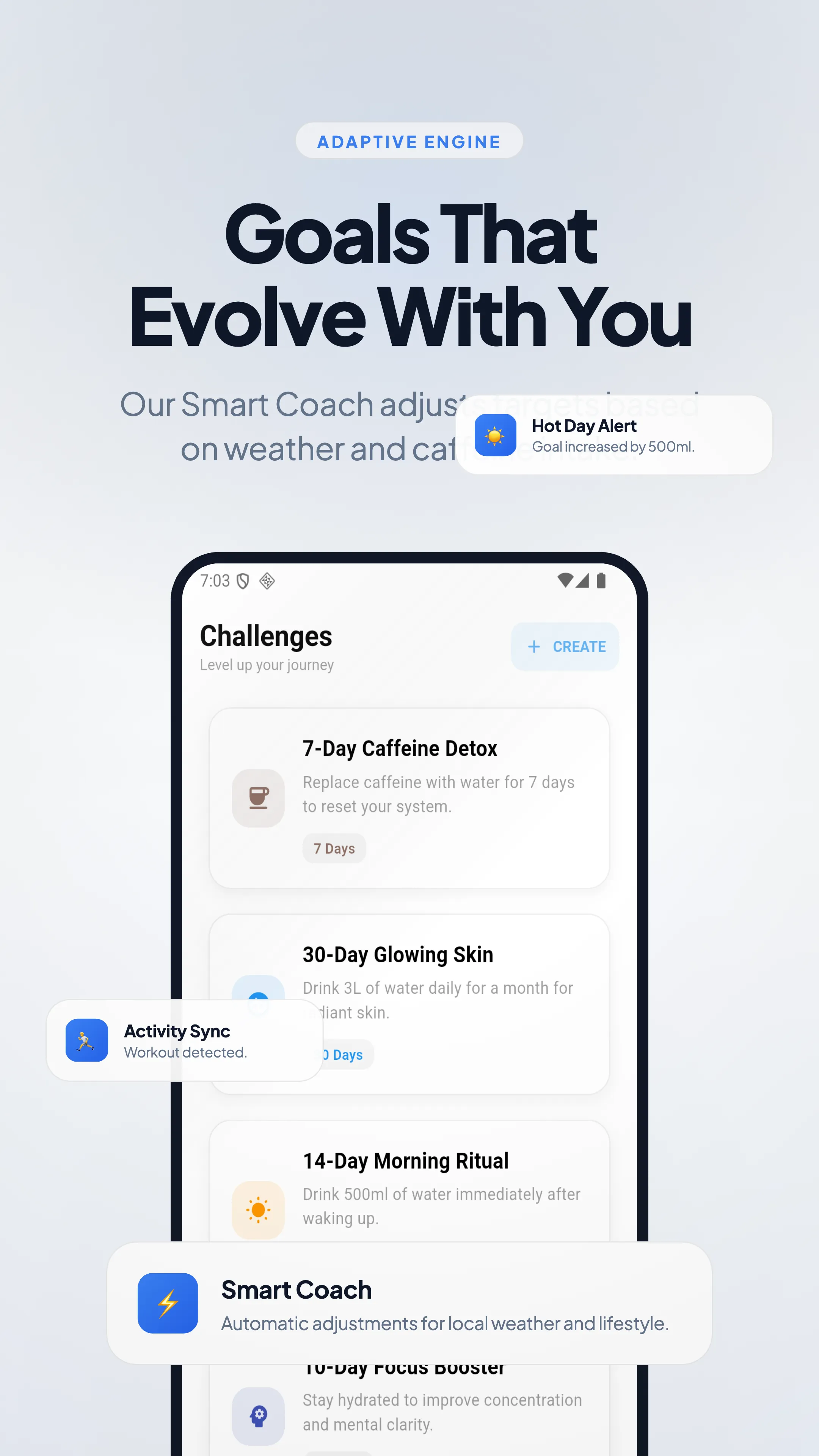
Part 4: The Locikit Way: Personalized Hydration Features
Aura isn’t just an app; it’s a personalized biological management system.
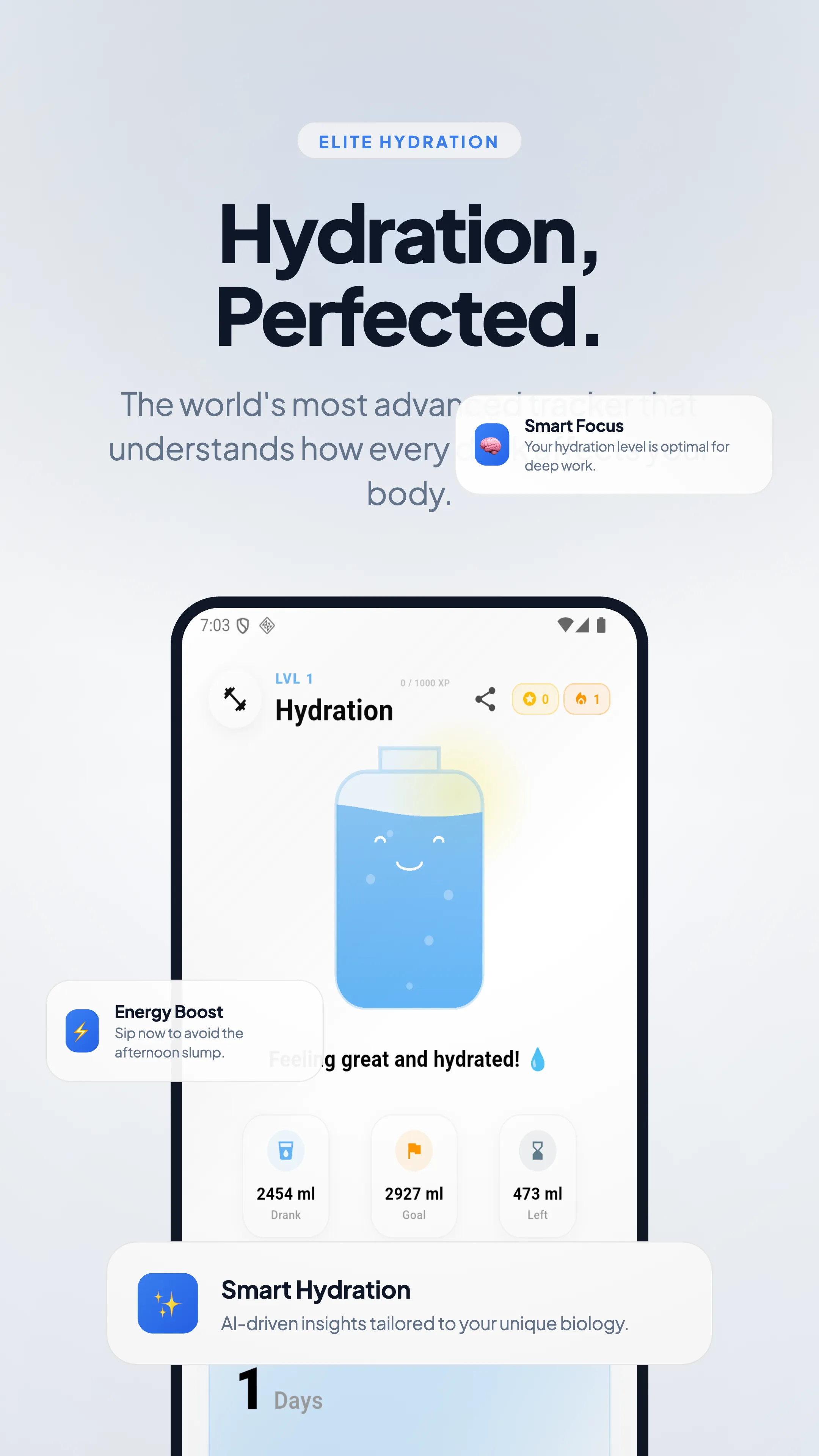
- Smart Hydration Tracking: Every log is timestamped. Aura uses this to build a “hydration profile” for you. Do you feel a slump at 3 PM? Aura analyzes your history to see if dehydration at 1 PM is the correlated factor.
- Bio-Individual Targets: Set your baseline using lean body mass and metabolic rate, not just total body weight. Fat tissue contains very little water, while muscle is roughly 75% water. Aura accounts for this difference.
- Dynamic Reminders: Aura won’t pester you if you’re already on track. It only notifies you when your calculated fluid balance dips below a critical threshold (usually 1.5% of body weight).
- Zero Cloud Tracking: Your health is your business. Aura works 100% offline, ensuring your data is never monetized or leaked.
Part 5: Hydration for Performance: The Protocols
To get the most out of your biology, you need a system. Here are the “Locikit Protocols” for optimal performance.
5.1 The Morning Flush
Upon waking, you are naturally dehydrated. You’ve spent 7-9 hours losing water through breath and skin.
- Protocol: Drink 500ml-750ml of water with 1/4 tsp of high-quality sea salt.
- Benefit: Rehydrates the brain, flushes the kidneys, and signals the body to begin metabolic processes.
5.2 The 90-Minute Focus Block
Cognitive performance peaks when hydration is steady.
- Protocol: Use Aura to log 200ml every 90 minutes during work blocks.
- Benefit: Prevents the “dip” in attention that occurs as blood volume drops.
5.3 Pre-Exercise Loading
Don’t wait until you’re thirsty to drink. Thirst is a lagging indicator.
- Protocol: Drink 500ml of electrolyte-rich water 30 minutes before a workout.
- Benefit: Buffers against sweat loss and maintains cardiovascular efficiency.
Part 6: Why Privacy Matters in Health Tracking
We live in an era of “Data Rent-Seeking,” where health apps sell your most private metrics to insurance companies and advertisers.
6.1 The Risk of Cloud Health Data
If your hydration data is stored on a server, it can be correlated with your location, sleep, and even your mood. This “behavioral surplus” is then sold to the highest bidder.
6.2 The Aura Solution: On-Device Sovereignty
By keeping all calculations local, Aura ensures that your health journey is yours alone. There are no accounts, no logins, and no data leaks. Your phone becomes a “Sovereign Health Device.”
Part 7: Frequently Asked Questions (FAQ)
Can I drink too much water?
Yes. Over-hydration (hyponatremia) is a real risk, especially for endurance athletes. Aura’s dynamic goal adjustment helps prevent this by lowering your target when your activity level is low.
Is coffee dehydrating?
This is a common myth. While caffeine is a mild diuretic, the water in the coffee more than compensates for the fluid loss. However, Aura suggests logging coffee separately as it affects your electrolyte balance differently than plain water.
Does Aura work without internet?
Yes. Aura is designed to be 100% functional offline. All AI models and environmental adjustments are handled on-device.
Conclusion: Take Control of Your Biology
Stop guessing with your biology. Compulsive water drinking is just as inefficient as chronic dehydration. With Aura Water, you get a scientific, privacy-first ally that ensures you are always operating at your biological peak.
Download Aura Water today and experience the difference of AI-powered hydration. Reclaim your focus, restore your energy, and take back your health sovereignty.